A garden marker is a stake or tag placed in a garden bed to identify a plant in place. A QR code garden marker adds a printed QR code so the marker also links to a digital Plant Record-care notes, watering history, growth updates, and Plant Photos-without crowding the physical tag. This guide explains how a QR code garden marker works and when it fits.
For the broader QR plant label overview, see QR code plant labels; for the general labeling method, start with how to label plants.
What a QR code garden marker is
A QR code is a machine-readable code that provides quick access to information. DENSO WAVE's QR Code explanation describes the code itself; what opens after a scan depends on the connected service. In a garden marker, that service is Acemaker QR Log, which stores the linked Plant Record.
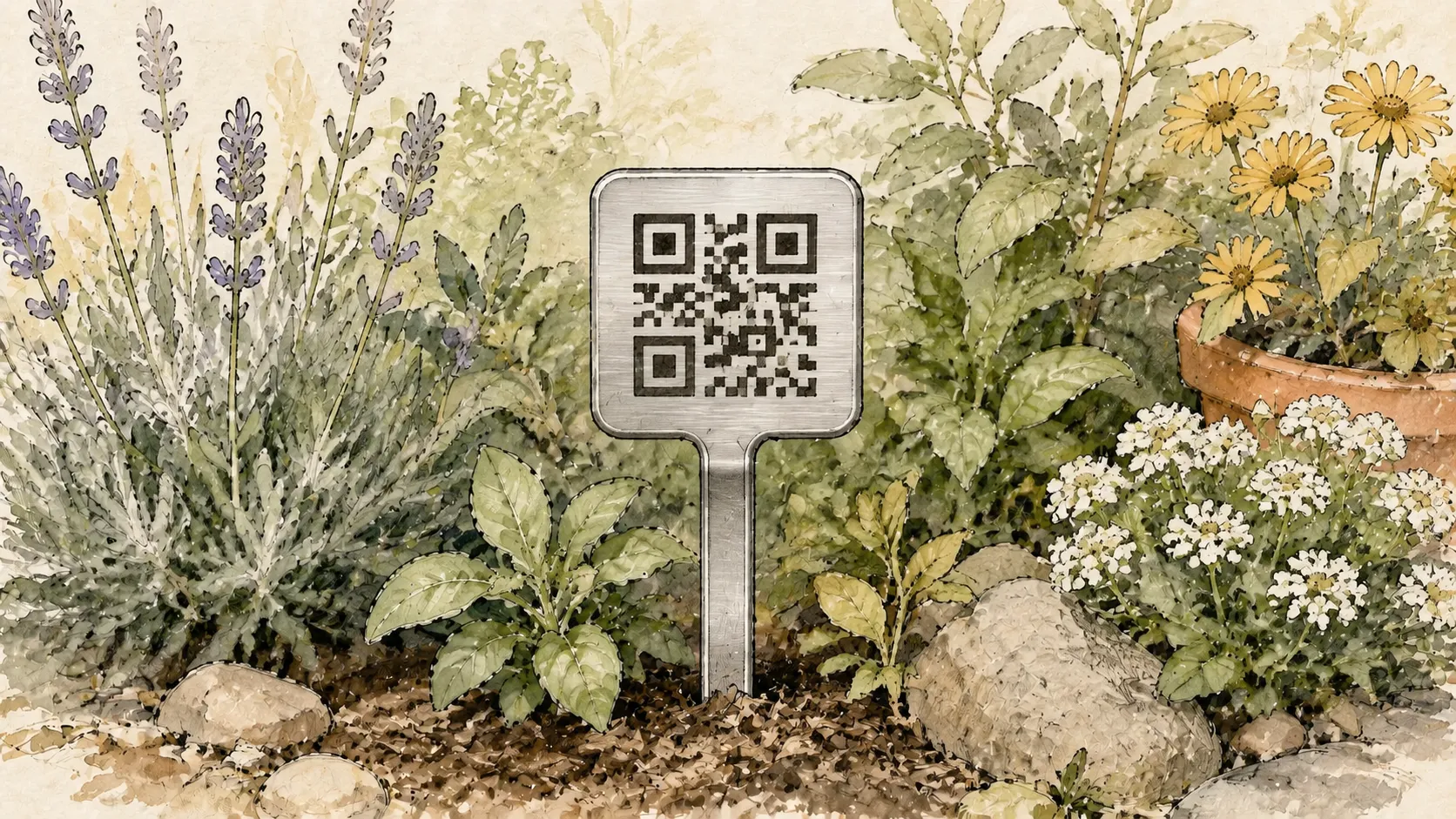
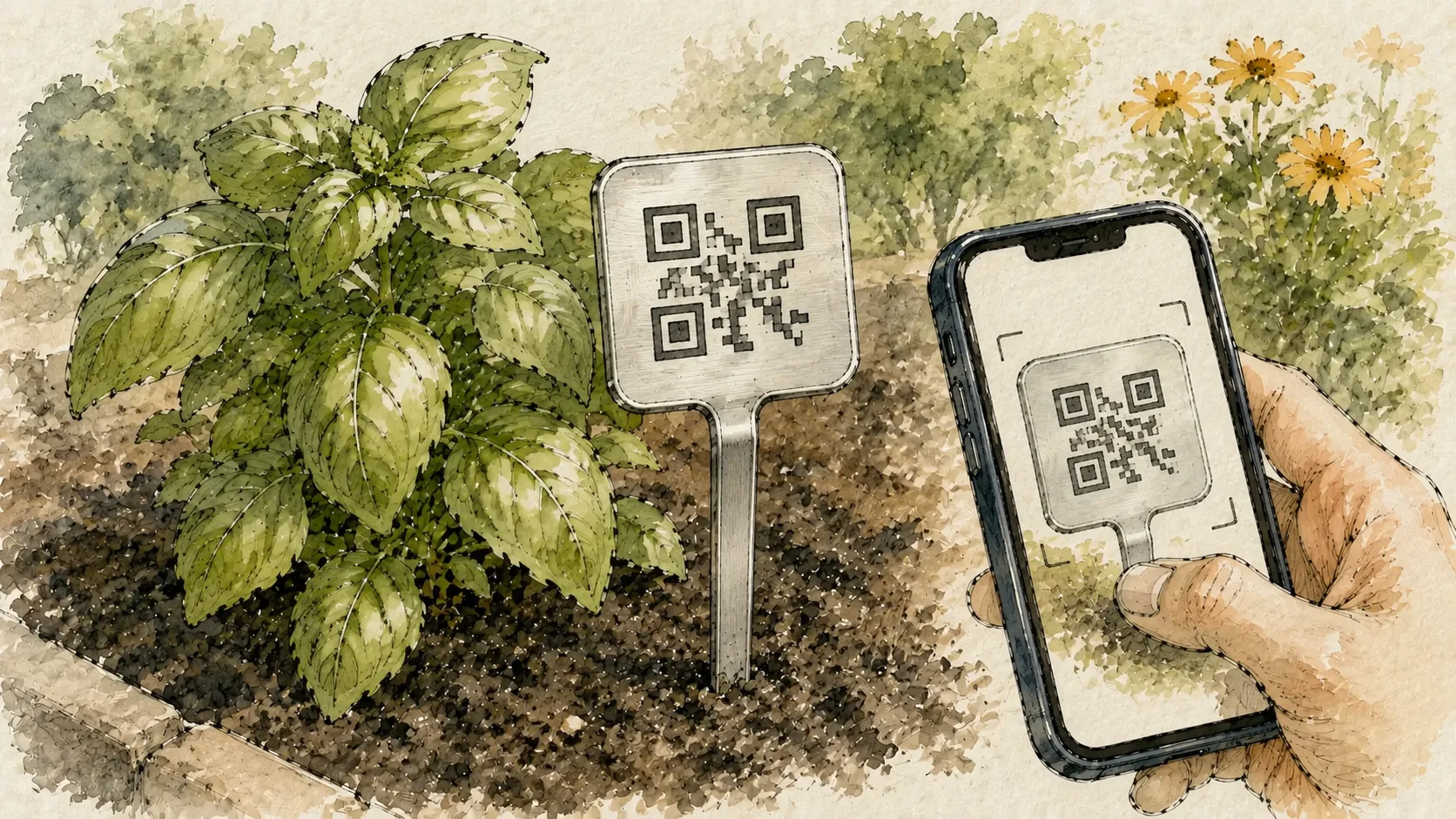
According to the official Acemaker product listing, Acemaker QR Plant Labels are T304 stainless steel labels. The narrow stake goes into the soil; the angled plate keeps the QR code reachable for scanning without bending down.
How a QR code garden marker works
- Place the marker in the bed, close to the plant but not where foliage or irrigation hides it.
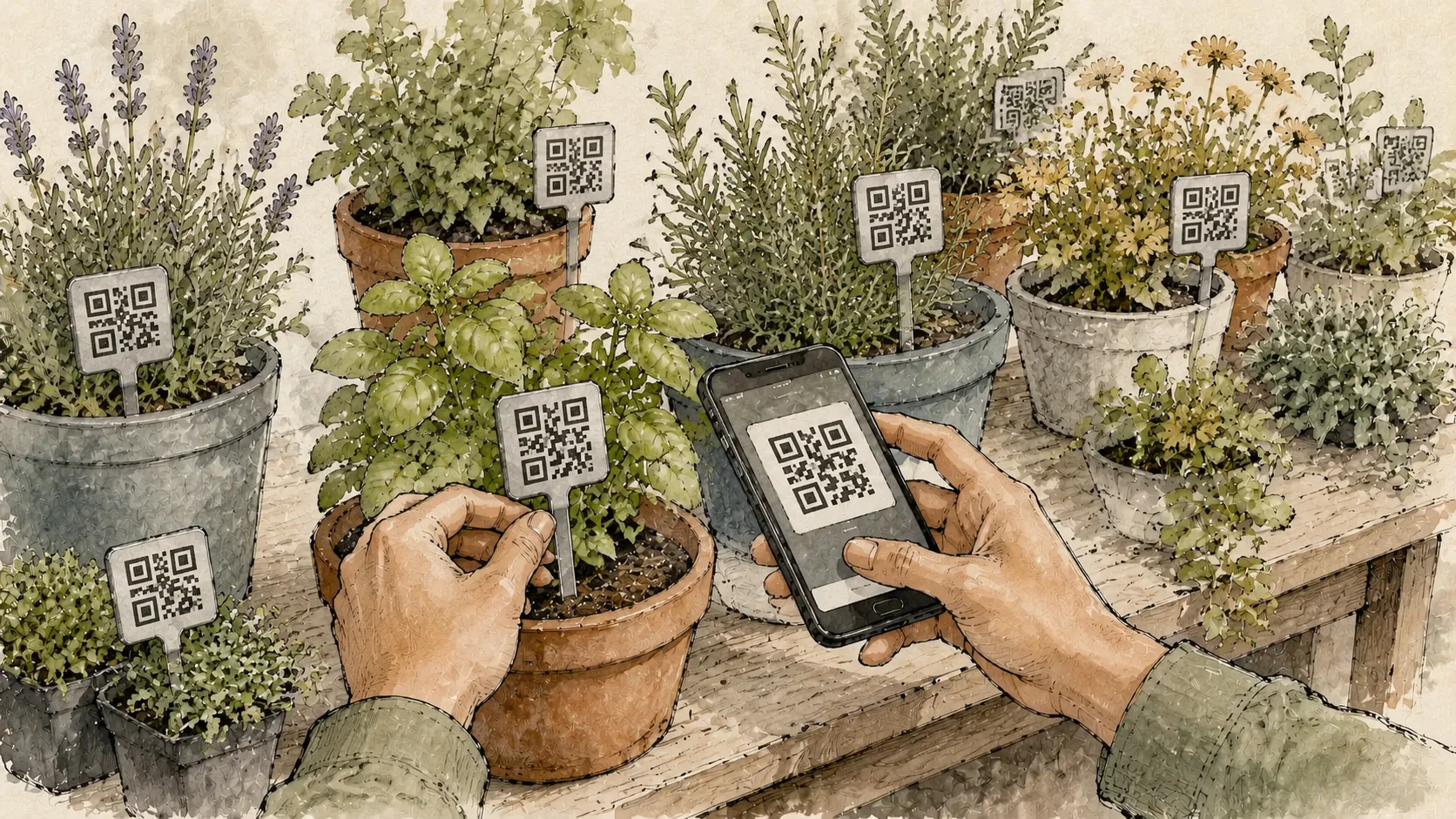
- Scan the code with a phone camera to open the linked Plant Record.
- Bind the marker to the plant by signing in or creating an account.
- Add details: plant name and variety, care notes, watering history, growth updates, and Plant Photos.
- Update over time by scanning again, without rewriting the marker.
The marker and the record stay linked to the same plant. The marker identifies the plant at a glance; the record holds the history.
What a QR code garden marker does well
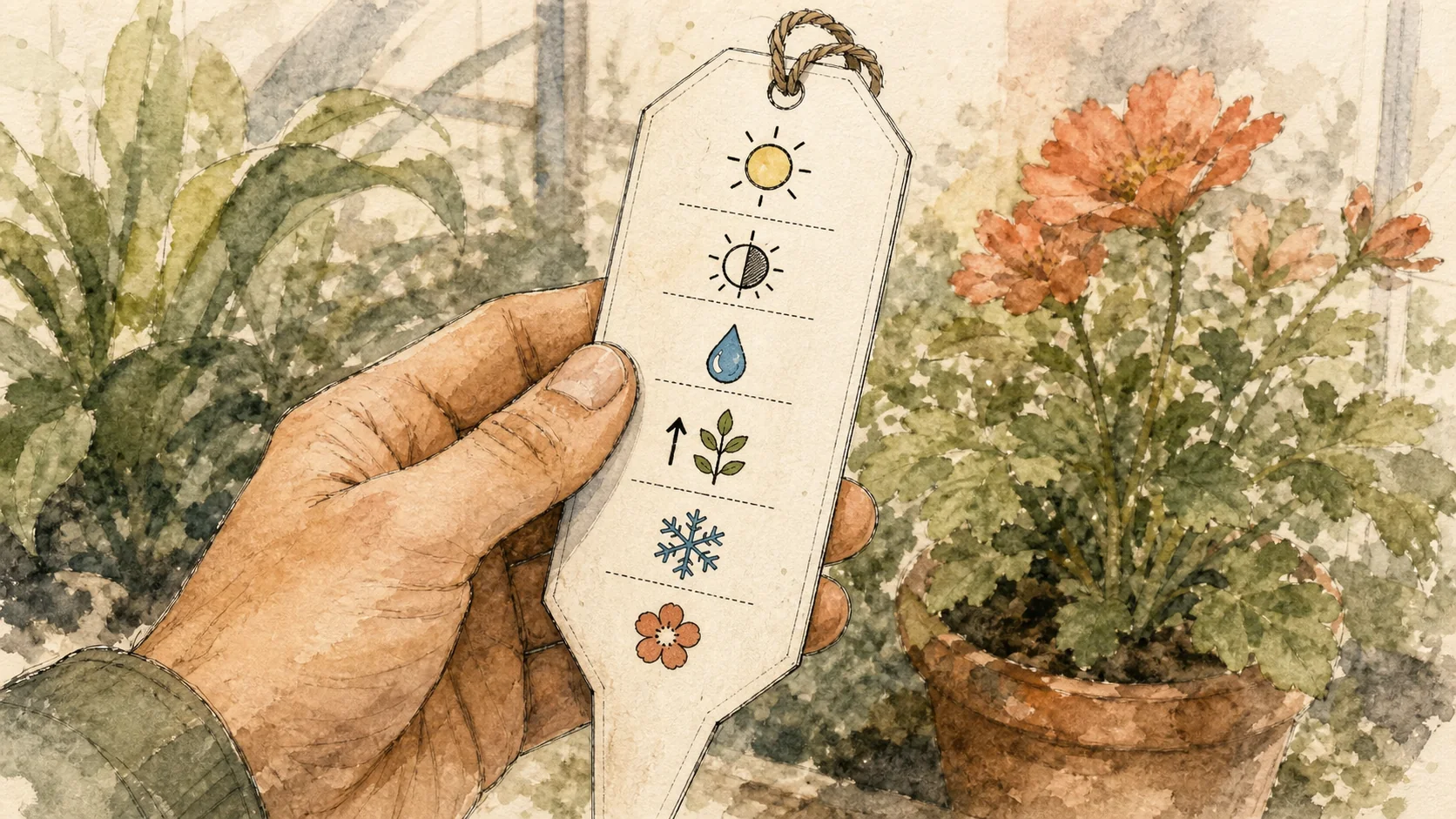
- Keeps the marker readable. A short visible name is enough; the longer record lives behind the code.
- Survives the weather. Stainless steel resists sun, rain, frost, and handling better than paper, untreated wood, or fading ink.
- Updates in place. Edit the linked Plant Record instead of pulling and rewriting the marker.
- Supports a bed-level view. Private Plant Collections can group markers by bed, season, or variety, while each marker stays tied to one plant.
What a QR code garden marker cannot do
A QR code does not measure plant conditions or write care history automatically. Acemaker QR Log does not automatically measure soil, identify a plant from a photo, diagnose pests, schedule watering, or send automatic reminders or notifications. The record is only as useful as the entries you maintain.
A scan needs a reachable code, a phone camera, and a connection to Acemaker QR Log. An account is needed for binding and editing; a visitor can view a Plant Record only when the owner has made it public.
When to choose a QR code garden marker
Choose a QR code garden marker when you:
- Want a durable in-bed marker plus a record that grows with the plant.
- Need user-recorded watering history or growth updates for plants that stay in place.
- Want to keep Plant Photos tied to the exact spot.
- Share a bed with family, helpers, or a small team.
- Prefer updating a digital record instead of rewriting the marker each season.
If you only need a temporary name for a seedling, a basic marker is the better fit. For choosing material by scenario, see the best way to label plants; for a comparison with traditional tags, read QR code plant labels vs traditional plant labels.
Start with a QR code garden marker
- Place an Acemaker QR Plant Label in the bed where the code stays reachable.
- Scan the QR code with your phone camera.
- Sign in or register to bind the marker to a Plant Record.
- Add the plant name, variety, and any details that will matter later.
- Keep the record updated as the plant grows; smart gardening tips covers the ongoing recording workflow.