There is no single best way to label plants. The right choice depends on how long the plant needs to stay identified, where it grows, and how much information you want to keep. The constant across every scenario is the same: a readable name plus a record you can find again later.
This guide breaks the decision down by scenario so you can pick the best material, placement, and record system for each. For the general workflow, start with how to label plants.
Seedlings, propagation trays, and temporary plants
For plants that will move soon or be transplanted, a temporary label is usually best.
- Use a clear name and date, and expect to replace the label.
- Prioritize speed and legibility over durability.
- Keep batch-level notes (source, sow date, variety) in one place so you can match them to the label later.
A temporary label works because the plant will not stay in the same spot long enough to need a permanent marker. If you keep a record, link it to the batch rather than to each short-lived seedling.
Outdoor beds and in-ground plantings
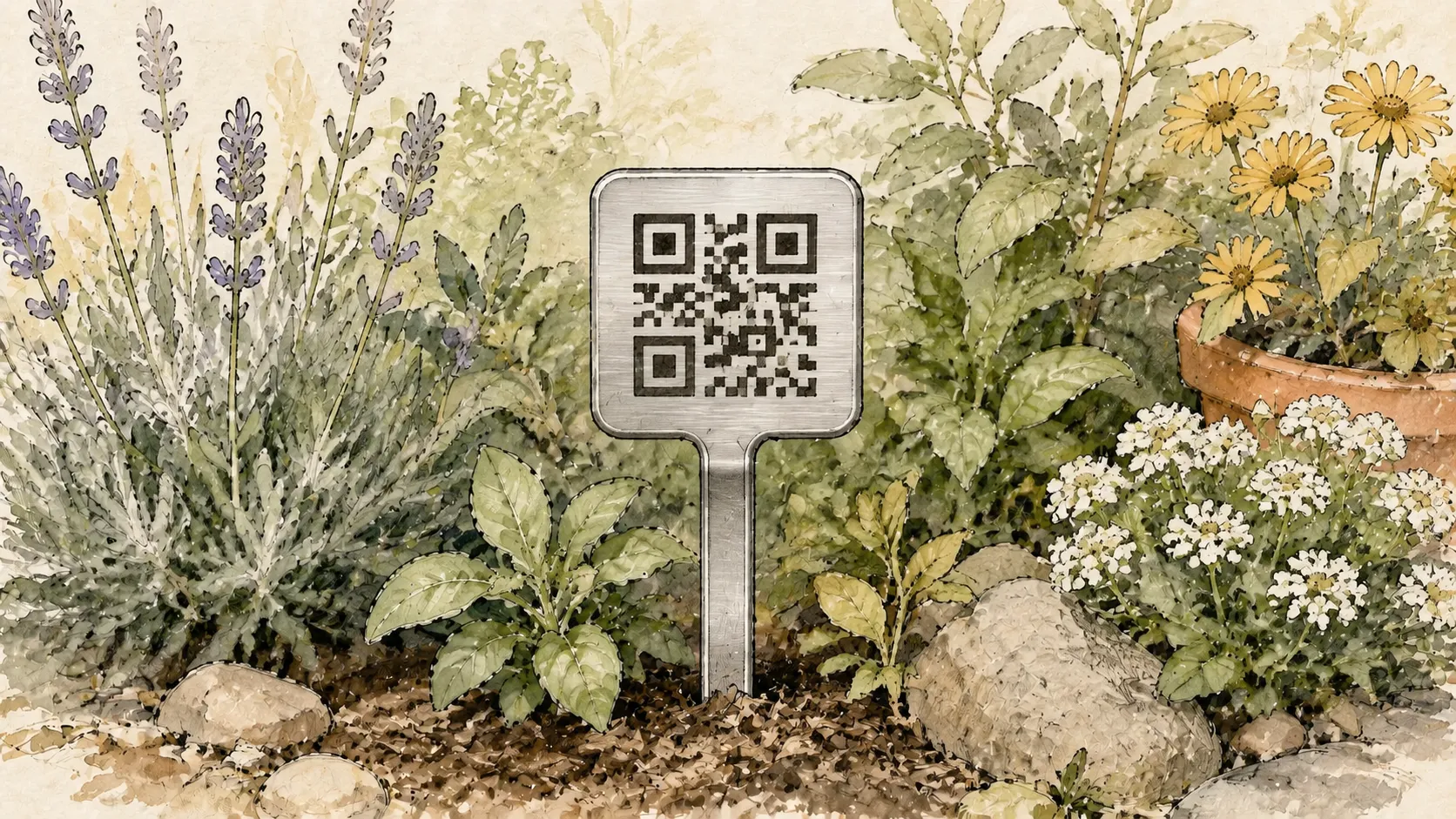
Outdoor beds need a label that survives sun, rain, frost, and handling. The best way to label plants in a garden bed is:
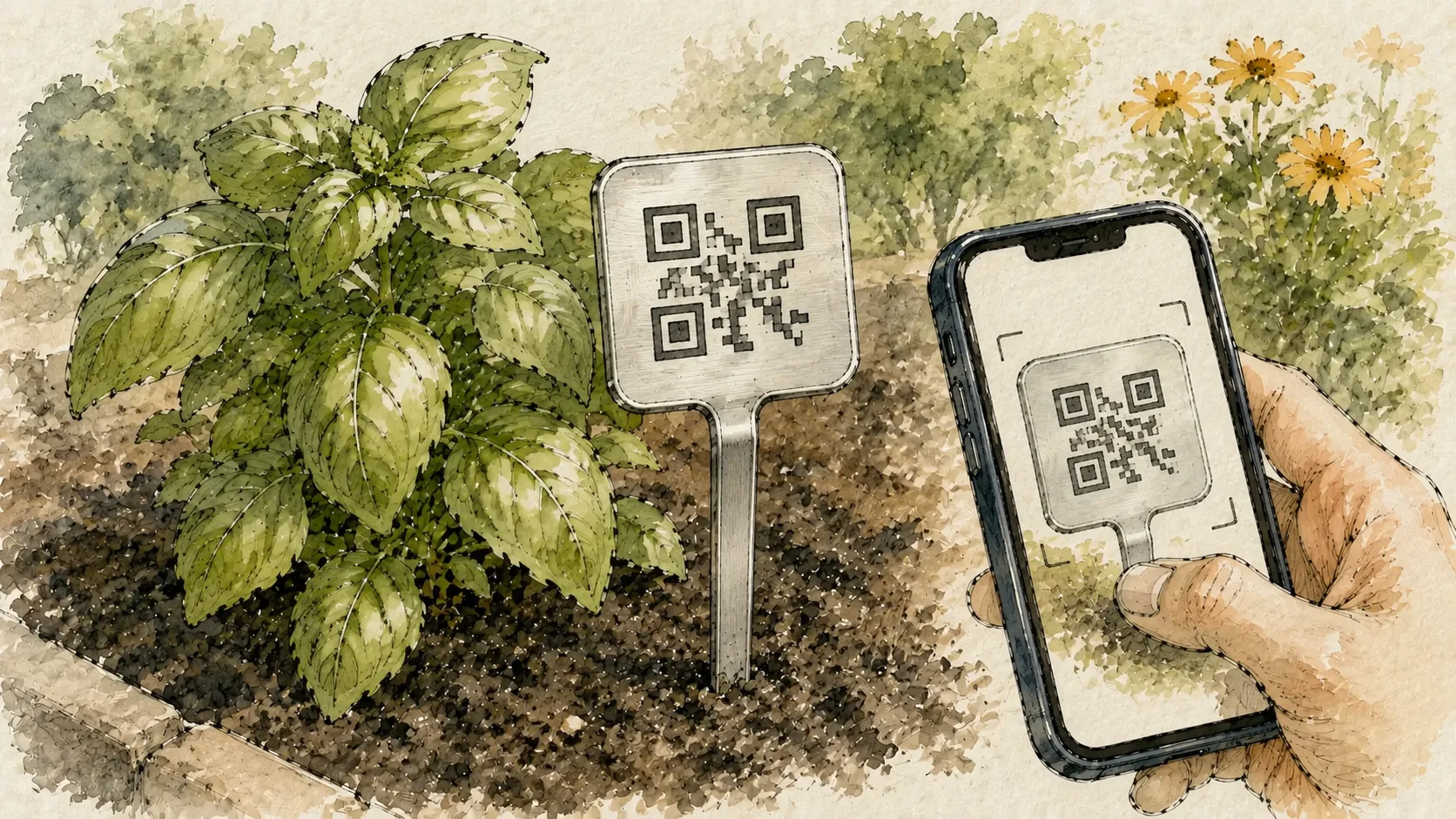
- Choose a weatherproof material. Metal and stainless steel labels resist fading, rust, and wear better than paper, untreated wood, or ink that washes off. According to the official Acemaker product listing, Acemaker QR Plant Labels use T304 stainless steel, which is waterproof and weatherproof for outdoor use.
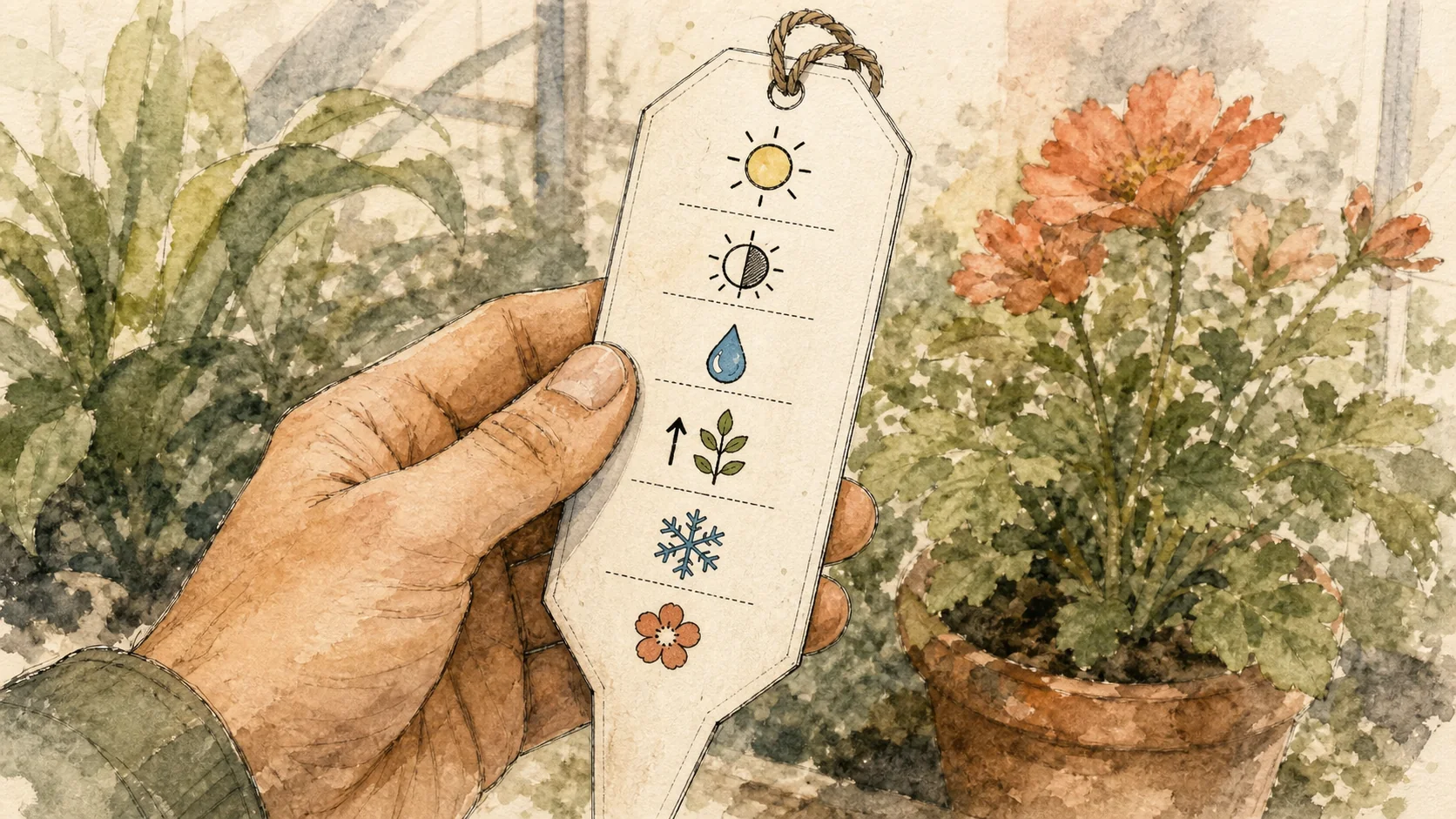
- Keep the visible text short. A name and variety you can read at a glance beats a cramped paragraph.
- Place the marker consistently. Put it close enough to identify the plant, but not where foliage, mulch, or irrigation will hide it.
- Store the longer record separately. Care notes, watering history, growth updates, and photos belong in a linked Plant Record, not squeezed onto a small tag.
University of California Agriculture and Natural Resources notes that a label only helps when it stays matched to the right plant-so choose a placement that will not drift to a neighbor.
Containers, pots, and patios
Containers are easy to move and easy to confuse. The best way to label container plants is to attach the marker to the plant, not the pot, so the identity travels with the plant when it is repotted.
- Match the label material to the exposure: a sunny patio can fade ink faster than a shaded spot.
- Reserve enough space on the tag for a name and a short identifier.
- Keep care notes in a linked record so repotting does not force a rewrite.
Nursery and grower batches
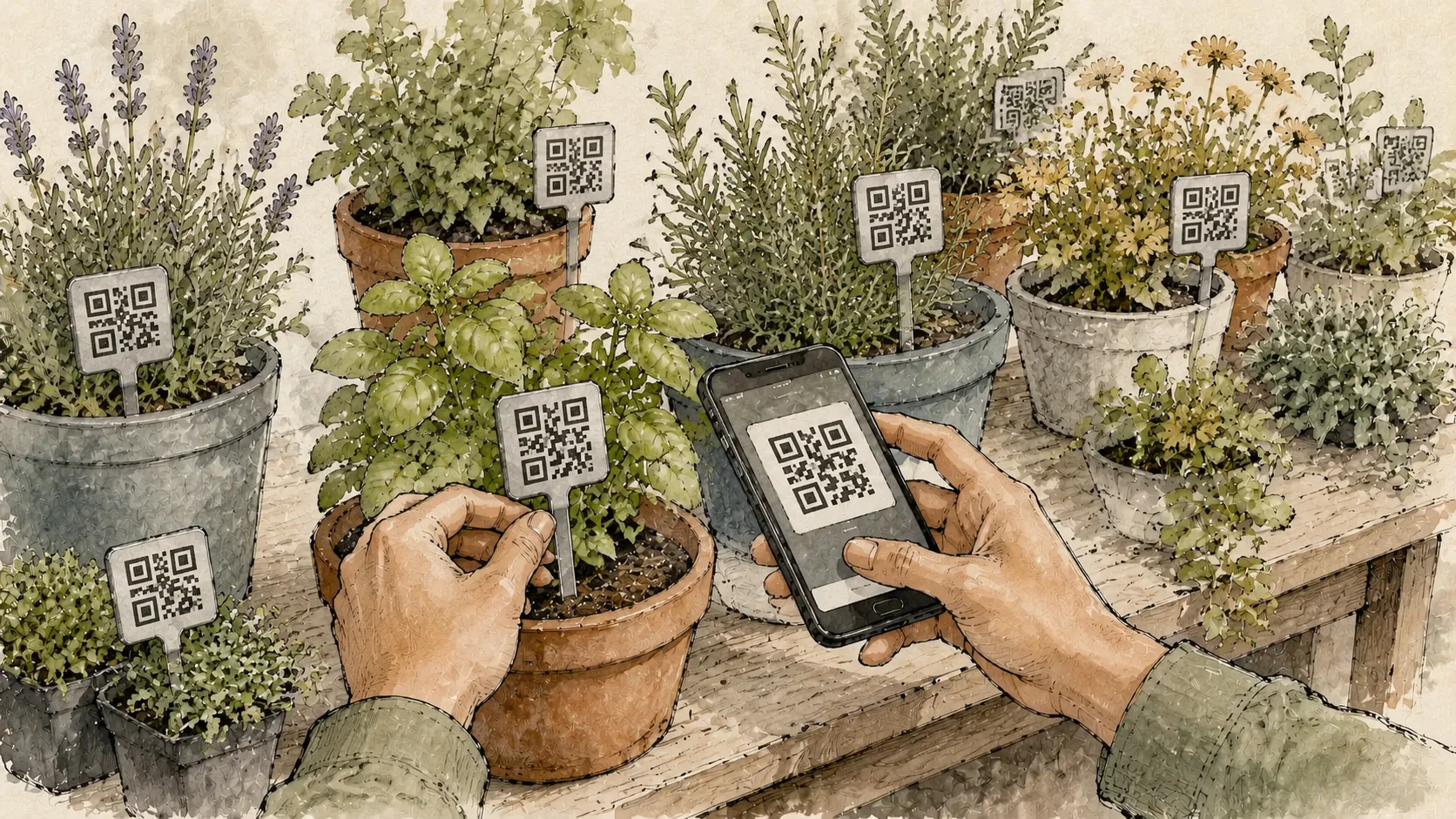
For nursery stock, the best way to label plants is a consistent, batch-aware system. Use the same naming format across a batch, place labels close to each plant, and record batch-level details like source, pot size, and date. A QR plant label lets you scan a plant and add or check its Plant Record without rewriting the tag. See how to label plants in a nursery for the full workflow.
When a QR plant label is the best choice
A QR plant label is the best fit when you want a durable physical marker plus a record that grows with the plant. After binding a label, you can add plant details, care notes, user-recorded watering history, growth updates, and Plant Photos-without rewriting the tag each time.
Choose a QR-based system when you:
- Want plant details and care notes tied to the physical tag.
- Need user-recorded watering history or growth updates in one place.
- Want to keep Plant Photos with the plant's record.
- Share care responsibilities with family, helpers, or a small team.
- Prefer updating a digital record instead of rewriting the physical label.
For a side-by-side comparison with traditional tags, read QR code plant labels vs traditional plant labels. For a focused look at QR labels, see QR code plant labels.
A quick decision table
| Scenario | Best label type | Why |
|---|---|---|
| Seedlings, propagation | Temporary, replaceable | Fast and cheap; plant will move soon |
| Outdoor beds | Weatherproof metal or stainless steel | Survives sun, rain, and frost |
| Containers and patios | Marker attached to the plant, not the pot | Identity travels through repotting |
| Nursery batches | Consistent batch format + QR record | Batch-aware, scannable, updatable |
| Shared gardens | QR plant label with a shared record | Multiple people read the same record |
Common mistakes to avoid
- Choosing a label that does not match the environment. An indoor label can become unreadable outdoors within a season.
- Cramming every care detail onto the tag. The tag should identify the plant; the record should hold the history.
- Inconsistent naming. A format that is clear in January should still make sense months later.
- Letting the label drift. A loose stake can move to a neighboring plant and misidentify it.
Start with the right marker
- Pick the scenario above that matches your plants.
- Choose a material and placement that fit the environment.
- Write a readable name and short identifier.
- If you use an Acemaker QR Plant Label, scan it, sign in or register, bind it to the plant, and add the details you want to keep.
- Keep the Plant Record updated as the plant grows; smart gardening tips covers the ongoing recording workflow.