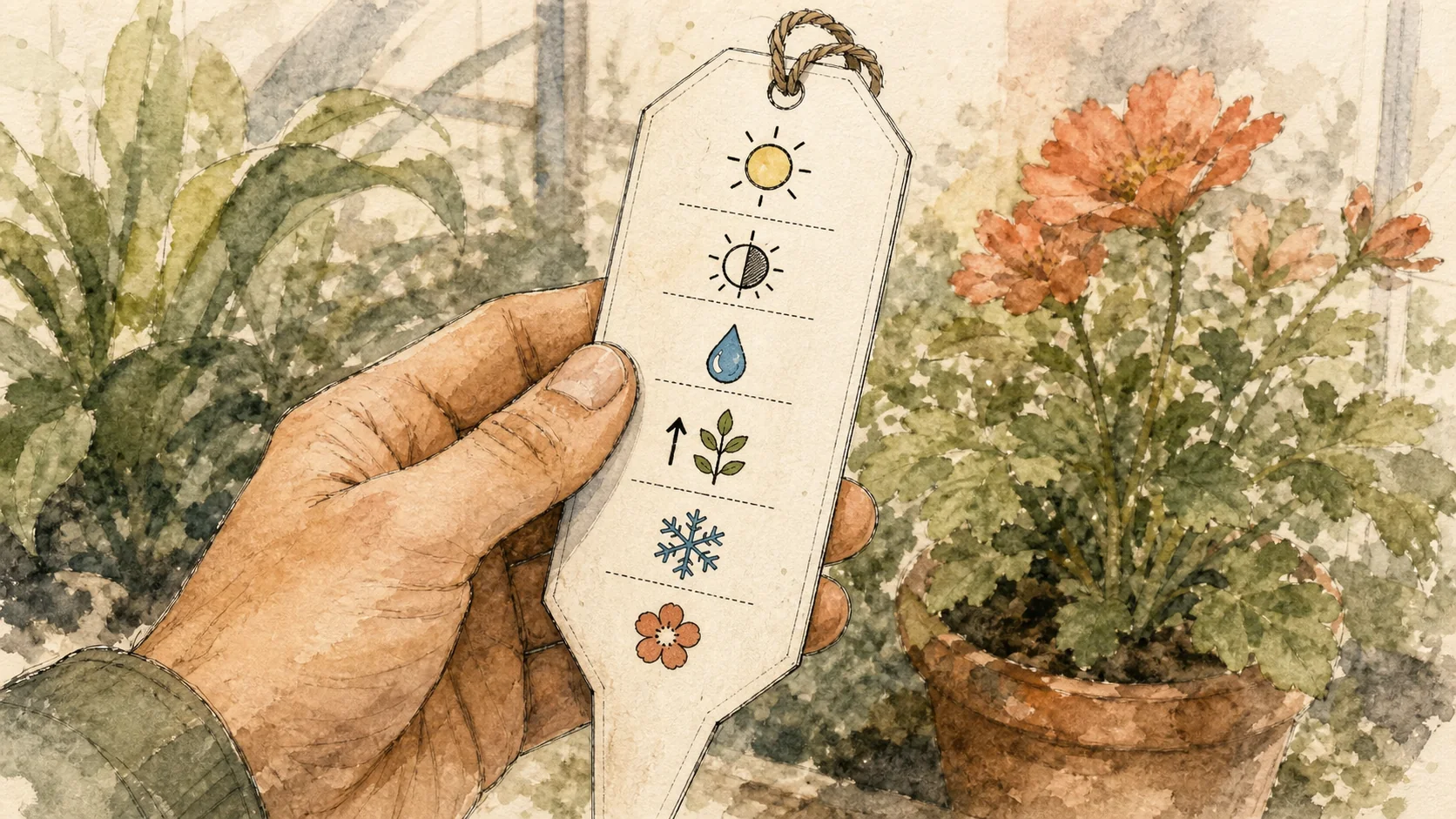
A plant tag is the printed card or stake that travels with a plant from a retail nursery or grower. Its symbols are shorthand for light, water, mature size, bloom time, hardiness, and sometimes pollinator or native-plant claims. There is no universal icon set: the same idea can be drawn differently by different growers, so the tag's own printed legend is always the first thing to read.
This guide focuses on retail nursery tags-the cards you find attached to a plant at a garden center. For the broader symbol reference that also covers labels you create yourself, see plant label symbols meaning.
What the main plant tag symbols mean
Light symbols
A sun, half-shaded sun, or cloud describes how much direct light the plant expects. The University of Maryland Extension's plant-tag guide treats full sun, part sun or shade, and full shade as practical growing descriptions rather than ratings. Common readings:
- Full sun - at least six hours of direct sunlight a day.
- Part sun or part shade - roughly three to six hours of direct light.
- Full shade - less than three hours of direct sun, not a completely dark spot.
Count the actual direct light at your planting site, not just the bright light near a window or under a tree.
Water and moisture symbols
One or more drops indicate a relative moisture preference, from lower to higher. The same number of drops can mean different things to different growers. Prefer the printed words-"low," "moderate," "moist," "well-drained," or "drought tolerant"-and adjust for rainfall, container size, soil, and season. A water icon does not tell you that a plant needs water today.
Mature size: height and spread
An upward arrow or number usually marks mature height; a sideways arrow or second number marks mature spread. Check the units before comparing plants: inches, feet, centimetres, and metres are not interchangeable. A small nursery container does not represent the plant's final size, so use the stated dimensions for spacing.
Bloom and seasonal interest
A flower, calendar, or shaded month area indicates when flowers are expected. Local climate, planting time, and the plant's maturity can shift the actual season, so treat the mark as an expectation rather than a date.
Hardiness, snowflakes, and zone numbers
A snowflake, thermometer, or number usually points to cold tolerance or a hardiness zone. The USDA Plant Hardiness Zone Map is based on average annual extreme minimum winter temperatures. A zone helps you compare a plant's typical cold tolerance with your location, but it does not guarantee survival against frost pockets, wind, wet soil, or an unusual season. Check which country's rating system the tag uses.
Pollinator and specialty marks
A bee, butterfly, or hummingbird mark signals a pollinator-related feature. A native-plant or eco mark may signal a regional claim. These are feature claims about the grower's selection, not proof that every garden will see the same result. Look for the accompanying words or certification name instead of relying on the pictogram.
Why the same symbol can mean different things on different tags
There is no single global dictionary for plant-tag artwork. A partly shaded sun may mean part sun, part shade, or an intermediate range; one drop may mean watering frequency, soil moisture, or a general moisture class. Retailers and growers also use different climate systems and units.
When an icon is unclear, work through this order:
- Find the legend or small print, often on the reverse of the tag.
- Read the words and numbers next to the icon.
- Confirm the plant name and cultivar so you can verify the advice from a horticultural source.
- Compare the guidance with your location, soil, container, and season.
- Ask the nursery when the tag still leaves a safety-critical question unanswered.
University of California Agriculture and Natural Resources also recommends confirming that the photograph, flower color, and container all belong together before trusting the tag.
Read the plant name before the symbols
A care icon cannot correct a misidentified plant. Read both the common name and the botanical name, then check the cultivar or variety. Similar common names can refer to different plants, while a botanical name gives you a more reliable starting point for further research. If the photograph does not match the plant in the pot, ask the nursery to confirm the identification.
Plant tag symbols cannot tell you everything
Symbols are useful summaries, but they cannot identify every microclimate or replace observation. They do not provide a guaranteed watering frequency, diagnose disease, measure soil moisture, promise a bloom date, or prove survival in an exceptional weather event. Use them as prompts to verify, not as final answers.
When you bring a plant home and want to keep your own readable marker, how to label plants explains naming, materials, and placement. For the best material by scenario, see the best way to label plants; for nursery batch workflow, see how to label plants in a nursery.